
May 1, 2026 · Dr. Marcus Rushing, MD, MPH, MS
Over the past few years, I have had what I can only describe as the unfortunate privilege of witnessing uncomfortable truths—truths that do not belong to me alone, but ripple outward and touch us all.
I was born and raised in inner-city Chicago. My life's work has always been rooted in service. I believed in showing up for others when it mattered most — whether it was advocating for Community Health Centers on Capitol Hill, caring for indigent patients who had no means to pay, or just caring for the nameless and the voiceless. I took pride in being a father and a husband, in building something steady and meaningful for my family. I also believed that systems — especially in medicine and law — were ultimately designed to protect people and not corporate interests. That belief never left me — but experience forced me to confront how often those systems fall short of what they are intended to be.
I never set out to "expose" anything — nor was I chasing truth for truth's sake. I spoke up because it was the right thing to do. But it didn't stop there.
These actions did not remain isolated. They carried forward — into legal proceedings, into new professional environments, into spaces that should have been neutral. Employers were contacted. Narratives were shaped without my voice present. And when I refused to affirm what I knew to be untrue, I lost again — another position, another subspecialty, another layer of stability.
So I adapted. I went to law school. I built something of my own and tried to move forward.
But the deeper reality remained: some systems are not built to allow clean separation from what has already been challenged. They are not designed to let you simply move on.
In the years that followed, false information continued to circulate, and professional barriers emerged in ways that made stability increasingly difficult to maintain. At times, even vulnerability itself seemed to become a point of exposure rather than protection.
All of this, because addressing a truth was seen as more dangerous than ignoring it.
So let's talk about these uncomfortable truths — not just mine, but ours.
This is not an argument against business or capitalism. Neither is it a rejection of institutions. It is a warning about what happens when accountability disappears and reputation becomes more valuable than truth. When preservation of image outweighs responsibility, the damage does not stay contained — it spreads.
The uncomfortable truth is that systems designed to protect people can be used against them.
The uncomfortable truth is that legal structures, which should represent fairness and accountability, can be wielded strategically to exhaust, isolate, and discredit individuals.
The uncomfortable truth is that the language of the court itself can be used to diminish Truth—reducing lived realities to something "merely" and dismissed as "moot." "Merely" and "Moot" are not substitutes for Truth.
The uncomfortable truth is that corporations can, at times, hide behind the legal guise of the sacred court to silence or harm those who speak out.
The uncomfortable truth is that authority alone does not guarantee courage or change. There are those in positions to intervene—who could uphold justice—but choose inaction when action carries personal or professional risk.
The uncomfortable truth is that people who speak up often pay a price far greater than those who remain silent.
The uncomfortable truth is that reputations are easier to dismantle than to defend, and livelihoods can be stripped away quietly—bureaucratically, plausibly—while those aligned with the status quo are protected.
The uncomfortable truth is that laws are broken more often by powerful institutions than we care to admit—often under the cover of ambiguity, technicality, or delay. Not because the truth is unclear, but because acknowledging it would require change.
The uncomfortable truth is that these dynamics do not remain isolated—they shape outcomes across society. They widen gaps in education, wealth, and opportunity. They separate parents from children. They silence voices that should be heard in courtrooms, hospitals, and boardrooms.
The uncomfortable truth is that when truth is ignored long enough, trust erodes—and "freedom" becomes a word we chant, rather than a reality we experience.
The uncomfortable truth is that power, when left unchecked, does what it has always done: it protects itself.
The uncomfortable truth is that awareness alone does not create change. Real change requires action—and action requires courage.
Taken together, these truths are not isolated — they have consequences.
They do not remain confined to institutions or abstract systems. They seep outward, shaping the character of public life and the expectations placed on those in power. A nation's strength is not measured only by its economy or its military. Those are visible markers. But the invisible ones — the integrity of its systems, the courage of its leaders, the accountability of its institutions — those are what hold everything together.
Integrity is not abstract. It is structural.
Without it, everything else eventually gives way.
We are often told that if you build something, people will come. But the inverse is also true: when what holds it together is removed, what remains does not simply disappear — it deteriorates. When integrity is absent, systems do not empty out; they fill with silence, fear, and quiet compromise, and in doing so, dysfunction becomes normalized. Not through loud declarations, but through steady, unchallenged concessions.
These are uncomfortable truths. They are difficult to sit with, harder to confront, and harder still to change. But ignoring them does not make them disappear. It only ensures that they persist — quietly shaping lives, decisions, and outcomes in ways we may not fully see until it is too late.
The question is not whether these truths exist, but rather what we are willing to do about them.
So Why Do I Still Believe?
Because despite everything I have seen — and everything I have lost in the process of seeing it — I still have not lost faith in what we are capable of becoming. The barriers are real. The systems are imperfect. The uncomfortable truths are not abstractions; they are lived realities — but they are not the end of our story.
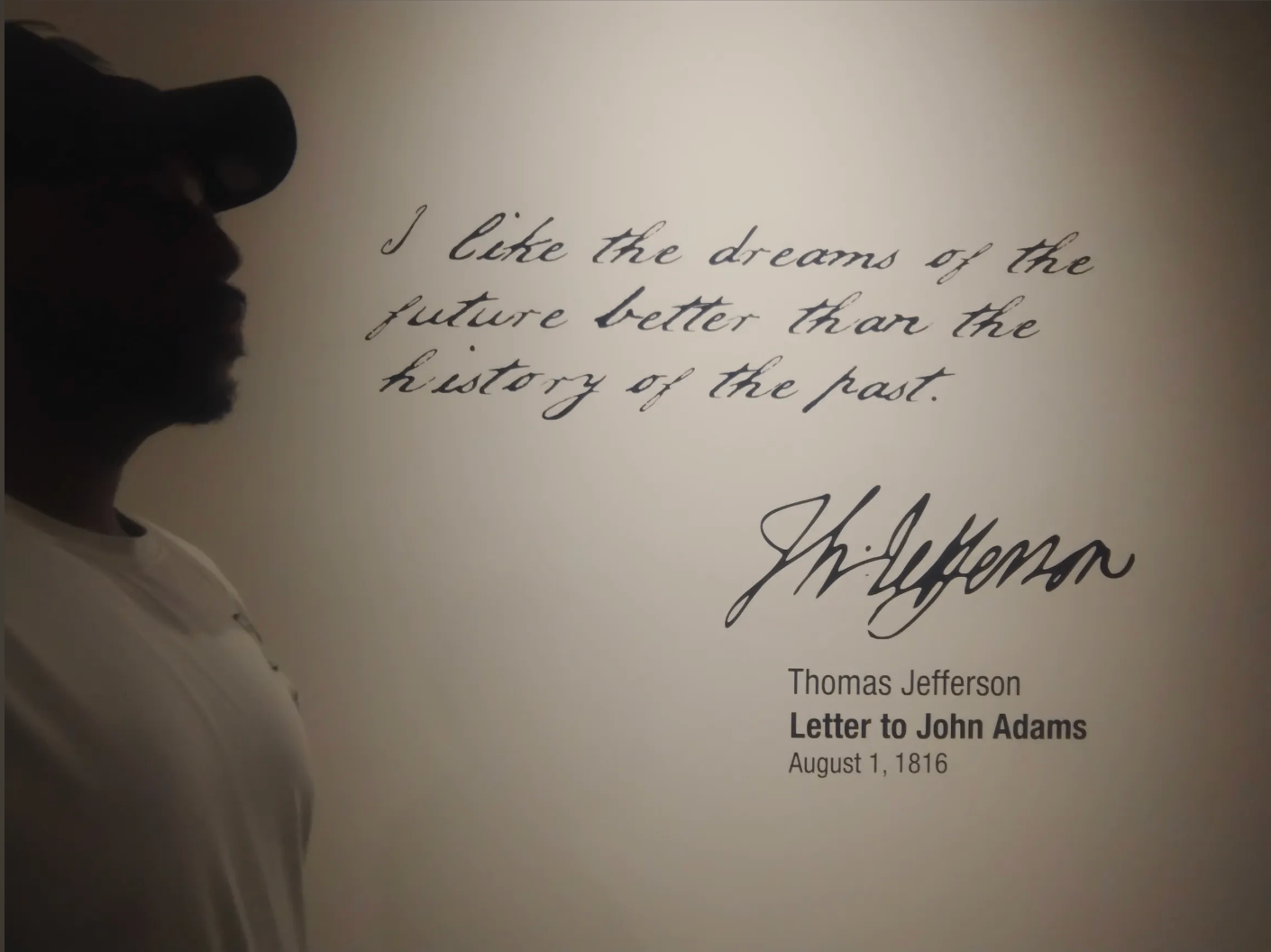
A nation is not defined only by what it has been, but by what it is willing to become.
When we choose to face hard realities instead of avoiding them, we move closer to living not just by the ideals we speak of, but by the principles we are willing to uphold. We move closer to a country where justice is not only proclaimed, but practiced — where the vision of its founding is not merely remembered, but actively pursued.
Facing uncomfortable truths is not the end of hope — it is the beginning of something better. Something beautiful. The canvas of our tomorrow is not determined by the strokes of our past, but by the choices we make today.
Marcus Rushing, MD, MPH, MS
Citizen · Father · Advocate